Enhancing Guest User Experience by Closing the Feedback Loop in Outage Reporting @AES
Timeline
4 weeks
Role
Solo designer
Team
1 Product Owner, 1 Developer, 1 Customer Insight Researcher
Overview
AES Indiana is an energy company serving over 500,000 residents and businesses in the capital city of Indiana. The customer portal allows users to pay bills and report outages. I was responsible for redesigning the outage reporting workflow and UI to increase user satisfaction.
Challenge
1. Technical constraints: backend slowness made instant report acknowledgement not possible.
2. Operational limits: power restoration could not be sped up anymore due to limited engineer capacity and storm severity.
Solution
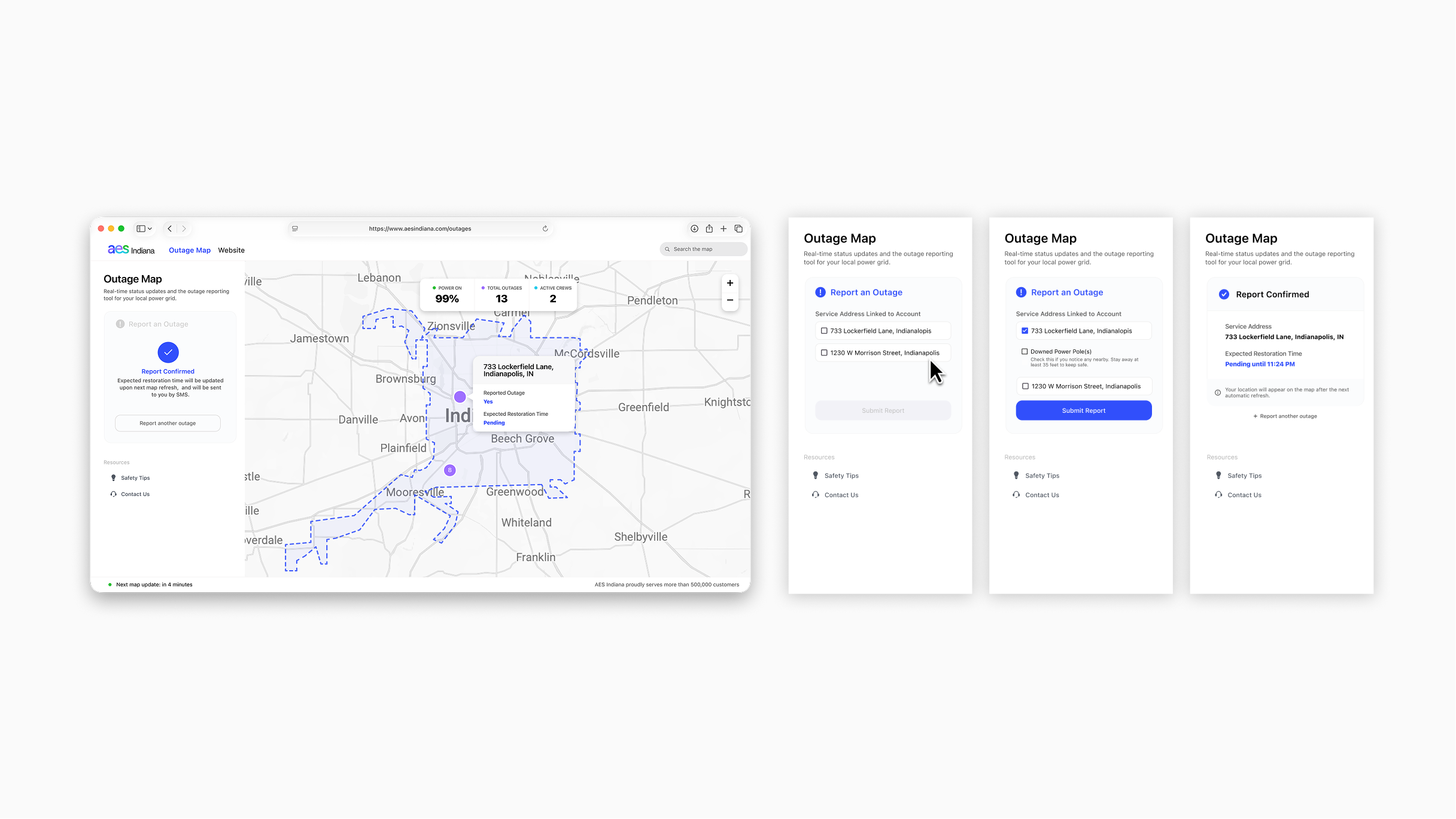
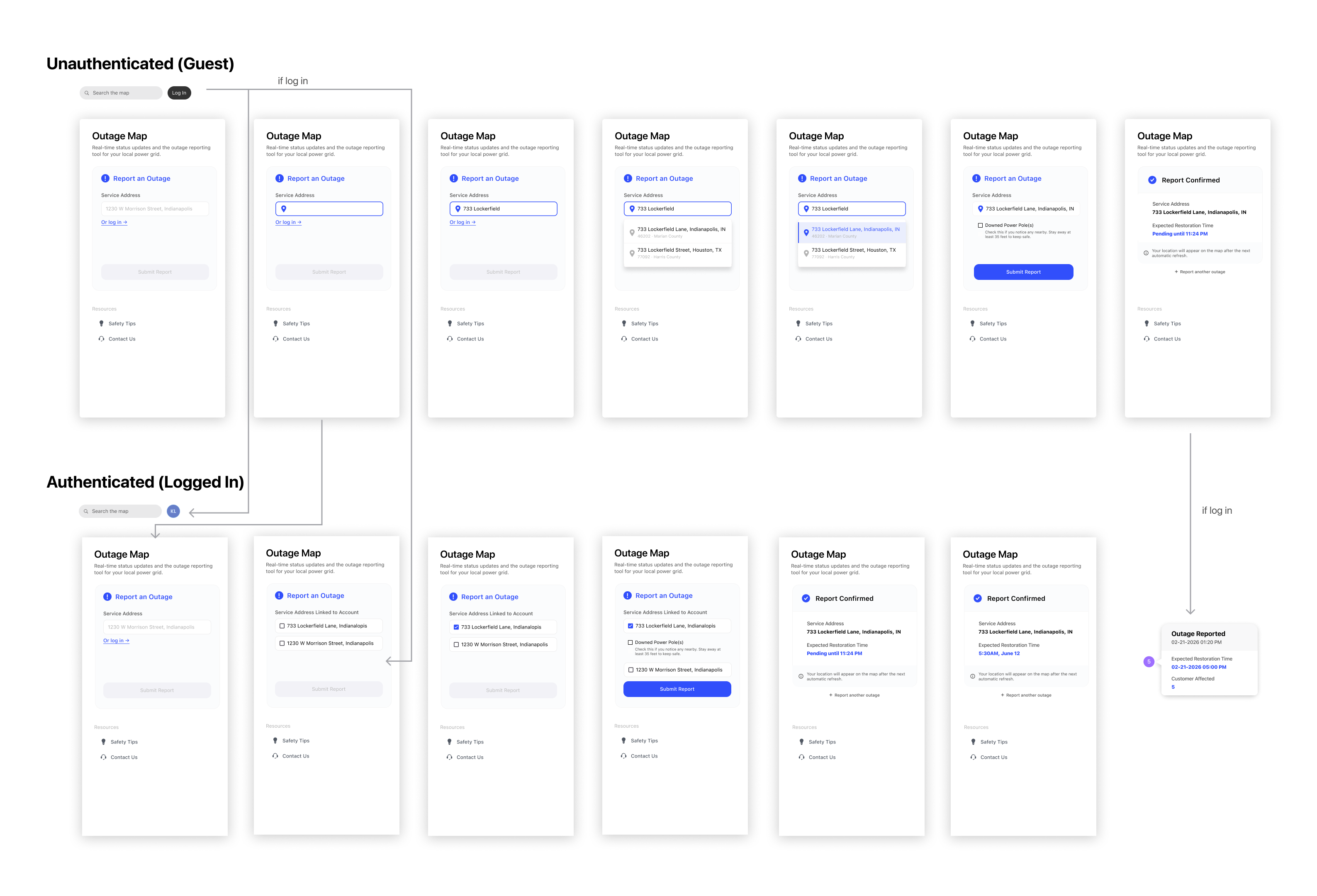
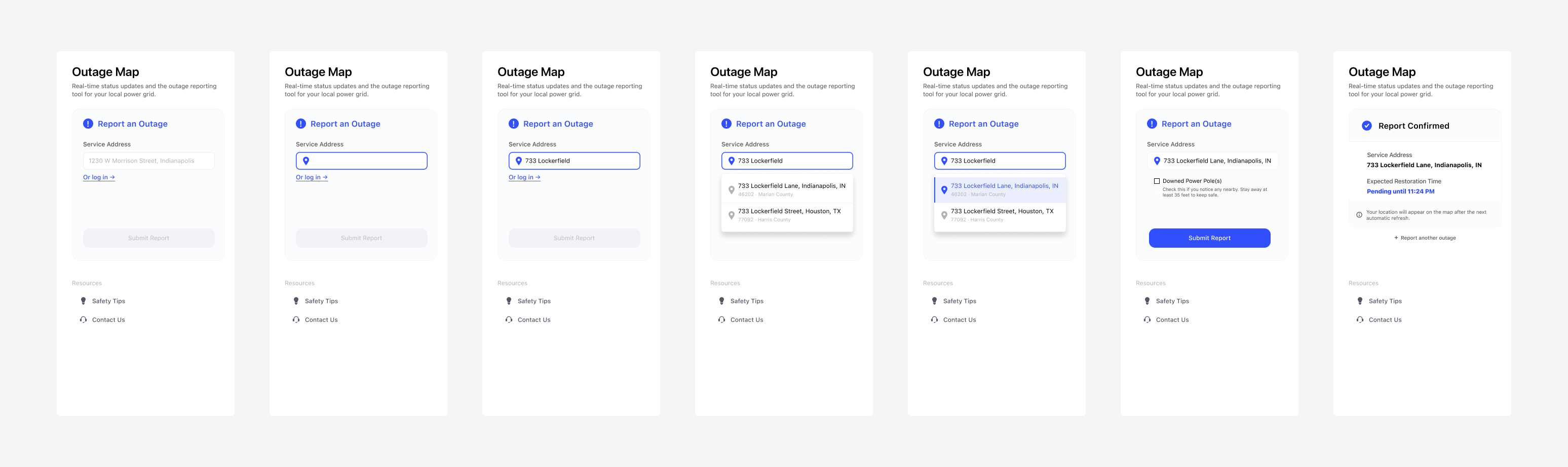
Report acknowledgment (unauthenticated)
Report acknowledgment (authenticated)
Search for outage status on the map
Impact
+0%
Satisfaction (2.2→3.4)
-0%
Rage click rate
01 Context
Frequent storms during spring and summer in mid-west often lead to massive power outages. Electricity companies have an outage map that allows users to report issues and check restoration status.
02 Problem
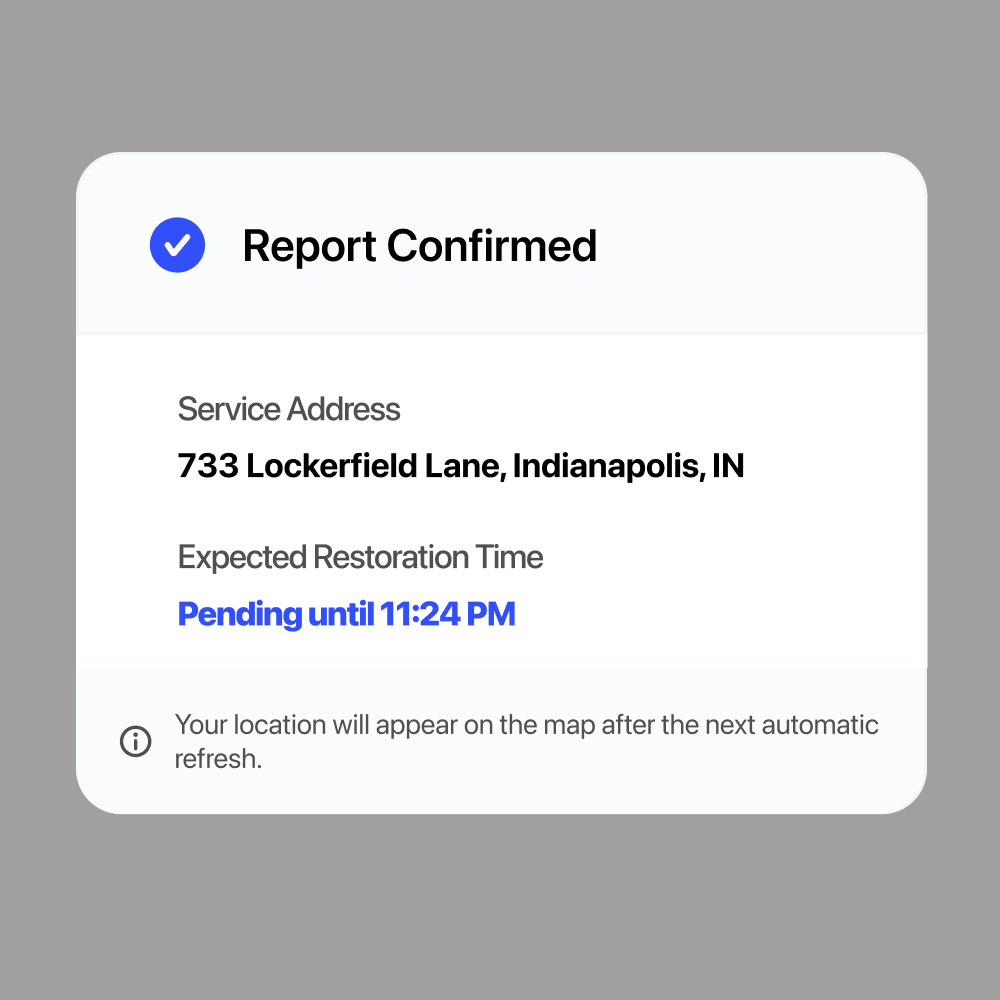
Users' reports will not be updated to the map until 15 minutes later due to backend system constraints. As a result, users are very worried if the outage is known by the company and if there are engineers working on the problem.
03 How transparent should we be about how the system works?
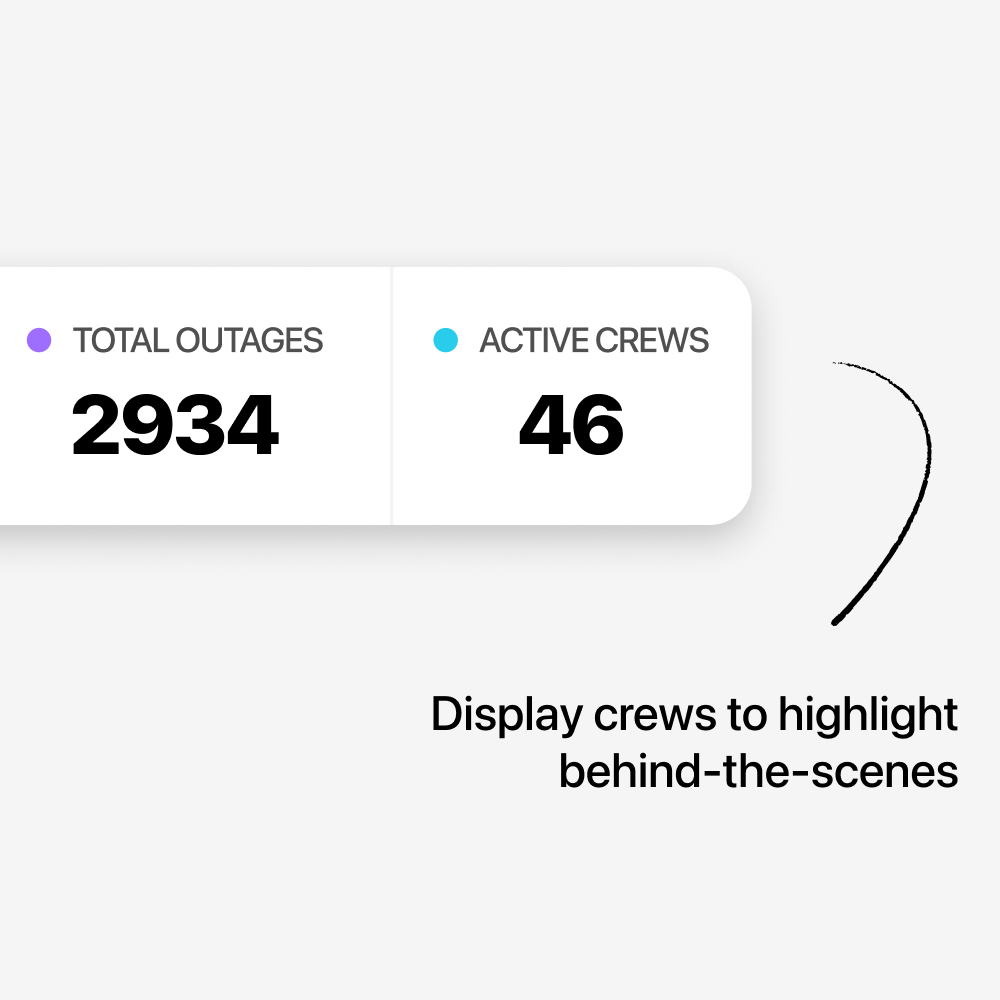
Through iterations, I learnt that my design should reveal part of the system behind the scenes to help customers understand the work involved, set realistic expectations, and then improve the overall experience.
04 Do users need to log in to report outages?
I conducted competitive analysis and user research to understand this problem. It turned out that removing the guest user option can cause really big trouble as some users don't know the account number or passwords during power outages.
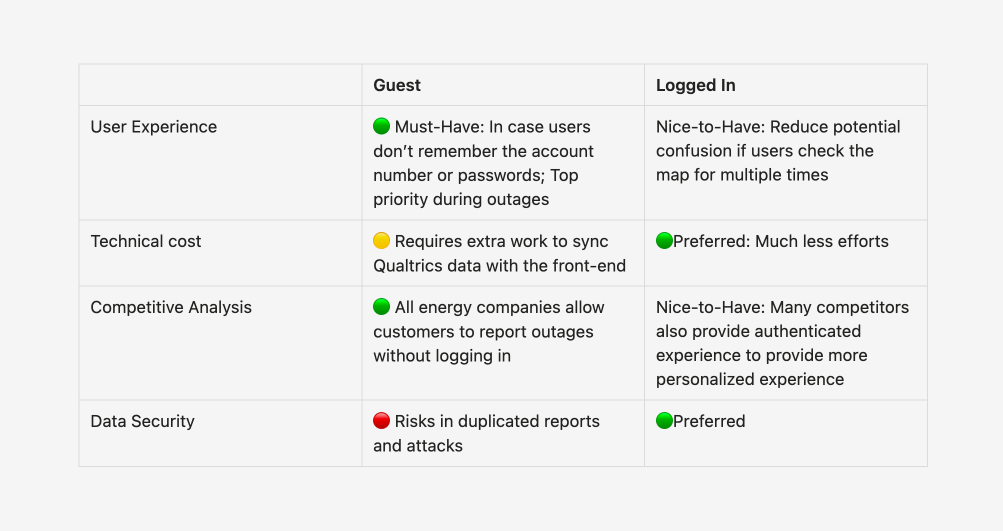
So my solution is two-step: customers are allowed to report the outage with simply their address if they're in a rush, but they can always log in to get real-time repair status and monitor multiple addresses.
Behind the scene: You got to drive changes
I identified this issue while conducting a UX audit for another project. I discussed it with my supervisor, the Product Owner, who seconded my thoughts and encouraged me to advocate for the project.
I proactively reached out to the researcher and developer team through 1:1 meetings. I highlighted the project's UX value and how it fit with their current priorities, successfully rallying their support.
@2026 This website is vibe coded with Claude and hosted on Github.

 LinkedIn
 chen_sixian@outlook.com